Introduction: Safety & Competence Aren’t Optional
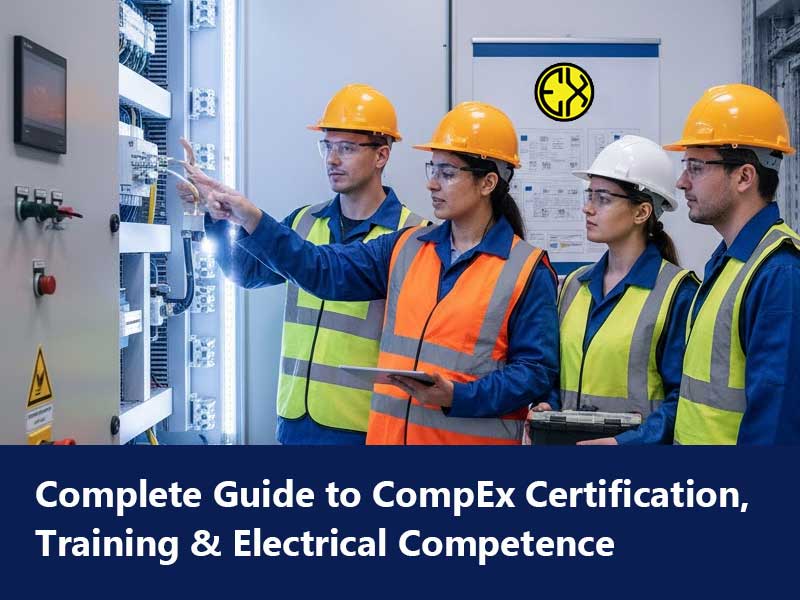
Working in explosive atmospheres demands more than skill—it requires certified competence. Electrical personnel, engineers, and safety officers need validated knowledge to prevent accidents, maintain compliance, and ensure operational efficiency. CompEx certification is the globally recognized benchmark for competence in explosive atmospheres, supported by trusted providers such as Kingsmen Certification Services and KL Training Academy.
This comprehensive guide covers what is CompEx, available training programs including the CompEx foundation qualification, certification steps, inspections, global recognition, and cost. Additionally, it includes How To tips and Difference Between comparisons to make learning actionable and practical. Partnering with Extrainings ensures personnel meet international standards and work safely across regions including Qatar, UAE, Saudi & GCC
For those interested, an enquiry form is available at Extrainings to request further information about courses and certification options.
Table of Contents
- What Is CompEx?
- Importance of CompEx Certification
- CompEx Training Programs Overview
- How To Choose the Right CompEx Course
- CompEx Certification Process
- Difference Between CompEx Ex 01 – Ex 04 and Ex 05 – Ex 06 Courses
- CompEx Electrical & Installation Competence
- CompEx Gas and Vapours Courses
- CompEx Dust (Combustible Dust) Courses
- CompEx Electrical Resit and Refresher Training
- CompEx Inspections & Compliance
- Cost of CompEx Certification & Training
- How To Maintain CompEx Certification
- Common Challenges in CompEx Certification
- Pro Tips for CompEx-Ready Personnel
- Conclusion
- FAQs
What Is CompEx?
CompEx stands for Competency in Explosive Atmospheres. It is an internationally recognized certification ensuring personnel can safely operate in hazardous and potentially explosive environments. The CompEx meaning extends to validating the competency of electrical or instrumentation technicians working in hazardous locations where gases, vapours, and dust can form explosive atmospheres.
The CompEx scheme is an internationally recognized system for validating the competency of personnel working in hazardous and explosive environments. CompEx applies to both electrical and mechanical work in explosive atmospheres and is essential for practicing electrical and instrument operatives working safely.
This certification ensures personnel understand installation practices, inspection protocols, and risk assessment techniques. The scheme is focused on certifying personal competency and competency validation for those working in hazardous areas. It is crucial for personnel in oil and gas, chemical plants, industrial processing units, and other high-risk facilities.
Pro Tip: CompEx certification validates personnel competence in hazardous/explosive atmospheres, covering electrical and mechanical operations, risk management, and safety compliance.
Importance of CompEx Certification
- Legal compliance: Meets local and international standards.
- Safety assurance: Reduces accidents in hazardous areas.
- Skill verification: Demonstrates technical and supervisory competence.
| Benefit | Impact | Who It Helps |
| Compliance | Meets regulatory requirements | Employers & contractors |
| Safety | Reduces incidents in explosive zones | Engineers & technicians |
| Skills Documentation | Confirms expertise | Personnel & auditors |
CompEx Training Programs Overview
Extrainings offers structured CompEx training for different roles. Each training program builds competence in both theoretical and practical hazardous area work. The training program includes options such as the CompEx Recognised Practitioners Programme (Ex01R – Ex04R) for ongoing competence and certification renewal.
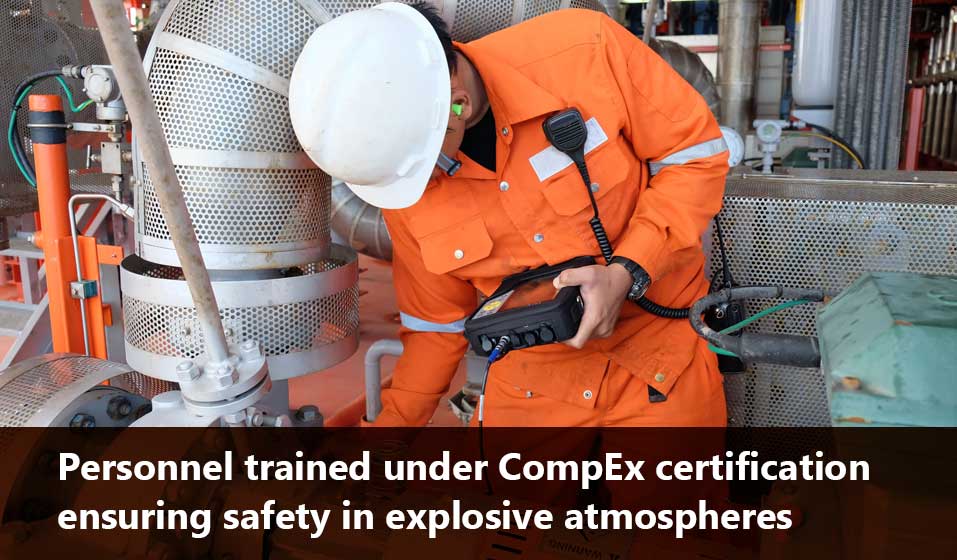
Note: KL Training Academy, in partnership with Kingsmen Certification Services, is a leading provider of CompEx certification in Qatar, UAE, Saudi Arabia, and GCC countries.
Pro Tip: Start with CompEx Ex 01 – Ex 04 for operators, CompEx Ex 05 – Ex 06 training for supervisors, and CompEx gas and vapours for specialists.
How To Choose the Right CompEx Course
Selecting the correct CompEx course ensures safety, compliance, and skill recognition.
Step-by-Step Approach:
- Assess Your Role: Operational, supervisory, or technical specialist.
- Identify Skills Required: Determine the specific skills required for your job in hazardous areas to ensure you select a course that covers all necessary competencies.
- Match to Course Level: Operators → CompEx Ex 01 – Ex 04, Supervisors → CompEx Ex 05 – Ex 06 qualification, Technical → Gas & Vapours.
- Check Mode & Location: Online, virtual, or onsite practical training.
- Plan for Certification: Consider assessments, practical tests, and renewals.
Pro Tip: For personnel seeking CompEx training in Qatar, UAE, Saudi and GCC, use Extrainings recognized courses for compliance.
CompEx Certification Process
The process verifies knowledge and practical skills.
| Step | Activity | Responsible | Output |
| 1 | Enroll in CompEx course | Candidate | Registration |
| 2 | Complete Foundation / CompEx Ex 01 – Ex 04 / Ex 05 – Ex 06 | Trainer | Attendance certificate |
| 3 | Assessment | Examiner | Written & practical tests (successful completion leads to CompEx certificate in core competence) |
| 4 | Certification Issue | Accrediting Body | CompEx certificate |
- Complete all required theory modules thoroughly to build a strong foundation of knowledge.
- Participate actively in practical training sessions to gain hands-on experience with hazardous area equipment and procedures.
- Demonstrate practical competence by successfully completing all practical assessments, including the practical element and practical resit if needed.
- Maintain detailed and accurate training logs and records of all assessments and practical work to support your certification process.
- Prepare for and clear all written and practical assessments successfully by reviewing course materials, practicing skills, and seeking clarification on difficult topics.
- Stay up-to-date with the latest standards and best practices related to hazardous area work to ensure compliance and confidence during assessments.
- Actively engage with instructors and fellow participants to ask questions, resolve uncertainties, and gain deeper insights into complex topics. This collaborative approach enhances comprehension and reinforces learning, ensuring a thorough grasp of critical concepts essential for safe and competent work in hazardous environments.
- Schedule your assessments and practical sessions in advance to allow sufficient preparation time.
- Utilize available resources such as study guides, practice exams, and online forums to reinforce learning.
- Keep a positive attitude and approach the certification process with diligence and commitment to safety and competence.
Following these steps will help you confidently pass your CompEx certification and demonstrate your competency in working safely in explosive atmospheres.
Difference Between CompEx Ex 01 - Ex 04 and Ex 05 - Ex 06 Courses
| Feature | CompEx Ex 01 – Ex 04 (Core CompEx Units) | CompEx Ex 05 – Ex 06 (Combustible Dust) |
| Audience | Operators/Technicians | Supervisors/Managers |
| Focus | Electrical installation & skills (Ex 01 Ex 04 modules) | Supervision, auditing, planning related to combustible dust hazards |
| Duration | 2–3 days | 3–5 days |
| Assessment | Practical + theory (CompEx unit) | Practical, theory, leadership |
| Certification | CompEx certificate | CompEx + supervisory qualification |
Pro Tip: Supervisors should take CompEx Ex 05 – Ex 06 after CompEx Ex 01 – Ex 04 for team alignment. CompEx Ex 01 – Ex 04 are core CompEx units covering key competencies for electrical and gas/vapour hazardous area work.
CompEx Electrical & Installation Competence
Electrical competence in hazardous areas is mandatory. The CompEx electrical course provides comprehensive training to ensure personnel are fully equipped to work safely and effectively in these challenging environments. The course covers a broad range of essential topics, including:
- Understanding hazardous area zones (Zone 0, 1, 2) and their significance in risk assessment and safe working practices.
- Detailed study of IEC 60079 installation standards, which govern the design, selection, and installation of electrical equipment in explosive atmospheres.
- Proper handling, identification, and interpretation of equipment markings, including Ex-marking, to ensure compliance with safety regulations.
- Practical wiring techniques, earthing methods, and inspection procedures essential for maintaining system integrity and preventing ignition sources.
- Physical installation and assembly of Ex equipment in hazardous areas, emphasizing correct techniques, adherence to safety standards, and prevention of potential hazards.
- Fundamental basic protection concepts such as intrinsic safety, flameproof enclosures, and increased safety methods to mitigate explosion risks.
- Implementation of safe working practices tailored to hazardous locations, including the use of personal protective equipment (PPE), risk mitigation strategies, and emergency response protocols.
- Hands-on practical training sessions designed to build confidence and competence in real-world scenarios, enabling technicians to perform tasks with precision and safety.
- Guidance on performing preventive maintenance and inspection of previously installed equipment to ensure ongoing compliance and operational safety.
- Understanding the role of a technical authority in managing hazardous area installations and ensuring adherence to regulatory requirements.
This comprehensive curriculum equips electrical and instrumentation technicians with the underpinning knowledge and practical skills necessary to operate safely within potentially hazardous environments. The course also prepares participants for formal assessments leading to the award of an internationally recognised CompEx certificate, validating their competence and enhancing their professional credentials.
Pro Tip: Regularly schedule hands-on assessments and refresher training to maintain and update your electrical competence in hazardous areas, ensuring continuous compliance and workplace safety.
Start your journey to certified competence today! Explore CompEx courses at Extrainings and secure your spot
CompEx Gas and Vapours Courses
Specialized training for safe handling of gas and vapor hazards.
Key Topics:
- Flammable gas identification: Understanding the types of gases that pose explosion risks, their properties, and how to detect them effectively to prevent accidents.
- Safe installation & inspection: Learning proper techniques for installing electrical and instrumentation equipment in hazardous areas, ensuring compliance with safety standards, and conducting thorough inspections to maintain equipment integrity.
- Working safely in potentially explosive or flammable environments and environments where gases, vapours, and dust can create hazards: Emphasizing best practices, risk assessments, and the use of personal protective equipment (PPE) to minimize risks while operating in these challenging conditions.
This comprehensive course equips electrical and instrumentation technicians with the knowledge and practical skills necessary to manage gas and vapor hazards safely and confidently, ensuring compliance and promoting workplace safety.
Pro Tip: The course covers vapours electrical safety standards relevant to hazardous areas. Combine Gas & Vapours with operational modules for integrated knowledge.
CompEx Dust (Combustible Dust) Courses
The CompEx Ex 05 – Ex 06 courses focus on hazards related to combustible dust, a critical concern in industries such as food manufacturing and pharmaceuticals. These courses provide underpinning knowledge and practical assessment for electrical personnel working in explosive dust atmospheres.
Topics include:
- Dust explosion risks and safe handling procedures.
- Area classification for dust atmospheres (IIIA, IIIB, IIIC).
- Installation, inspection, and maintenance of electrical equipment in dust hazardous zones.
- Compliance with ATEX directives and DSEAR regulations specific to combustible dust.
Pro Tip: Combining dust and gas/vapour training provides a comprehensive understanding of explosive atmospheres.
CompEx Electrical Resit and Refresher Training
Candidates who do not pass the practical or theory parts of the CompEx electrical course (Ex 01 – Ex 04) can undertake a CompEx electrical resit. This includes:
- Theory resit: Re-examination of the theoretical knowledge.
- Practical resit: Re-assessment of hands-on skills.
Both resits must be completed within 12 months of the original assessment, with a maximum of two attempts allowed.
Refresher training is also available through the CompEx Recognised Practitioners Programme (RPP), which helps maintain certification validity and keeps personnel updated on industry changes.
Pro Tip: Regular participation in refresher courses and practical assessments ensures continuous competency and compliance with hazardous area regulations.
CompEx Inspections & Compliance
Inspections play a crucial role in validating personnel competence and ensuring ongoing compliance with safety standards in hazardous environments.
Inspection Types:
| Type | Description | Purpose |
| Initial | Conducted immediately after course completion | To verify that newly acquired skills and knowledge are applied correctly in real work scenarios |
| Periodic | Scheduled inspections carried out at regular intervals | To ensure personnel maintain compliance and competence over time through continuous evaluation |
| Spot/Random | Unscheduled checks conducted during operations | To monitor real-time safety practices, identify potential issues, and address non-compliance promptly |
Inspection Checklist:
| Checklist Item | Details | Importance |
| Knowledge of hazardous zones | Understanding zone classifications and associated risks | Ensures accurate risk assessment and implementation of appropriate safety measures |
| Safe installation practices | Adherence to approved methods and industry standards | Prevents hazards caused by improper installation techniques |
| Proper tool & PPE use | Use of appropriate tools and personal protective equipment | Minimizes exposure to hazards and enhances overall safety |
| Evidence of core competence | Documentation and demonstration of relevant skills and qualifications | Validates personnel readiness and confirms competency status |
Cost of CompEx Certification & Training
Costs vary by course, location, and provider. Several factors influence the overall cost of obtaining CompEx certification, including:
- Course Type: Foundation, Ex 01 – Ex 04, Ex 05 – Ex 06, Gas & Vapours, or virtual courses each have different pricing.
- Location: Training centers in different regions such as Qatar, UAE, Saudi and GCC may have varying fees based on local demand and facilities.
- Delivery Mode: Online, virtual, onsite classroom, or hybrid courses can affect the price.
- Additional Materials: Costs may include course materials, examination fees, and certification issuance.
- Bundle Packages: Combining multiple courses (e.g., Ex 01 – Ex 04 and Ex 05 – Ex 06) often results in cost savings.
- Refresher Courses: Recertification or refresher training such as the Recognised Practitioners Programme (RPP) may have separate pricing.
The CompEx certification cost varies depending on the specific course selected, the location of the training centre, and the mode of delivery (online, virtual, or onsite practical). Affordable options are available for professionals seeking CompEx certification in Qatar, UAE, Saudi and GCC, with flexible packages to suit different budgets and schedules. Investing in bundled courses can also provide added value through combined training materials and streamlined certification processes, ensuring candidates receive thorough preparation and recognized qualifications in hazardous area awareness and competence.
Pro Tip: Bundling Ex 01 – Ex 04 and Ex 05 – Ex 06 courses not only reduces overall costs but also provides a comprehensive skill set that covers both operational and supervisory competencies in hazardous environments, making it a smart investment for career advancement.
Ready to certify your skills? Register now for CompEx training and assessments through our trusted providers.
How To Maintain CompEx Certification
Maintain competence and compliance by following these essential practices:
- Keeping certificates and logs updated regularly to ensure all records reflect current qualifications and training activities. Accurate documentation supports audit readiness and demonstrates ongoing commitment to safety standards.
- Attending refresher courses such as the RPP refresher qualification to renew knowledge and skills. These courses help personnel stay current with evolving industry standards, regulations, and best practices, ensuring their competence remains valid throughout their certification period.
- Participating in hands-on assessments periodically to reinforce practical skills. Practical evaluations provide opportunities to apply theoretical knowledge in real-world scenarios, identify areas for improvement, and maintain high levels of proficiency in hazardous environments.
- Using compliance tools for scheduling training, assessments, and renewals efficiently. Leveraging digital platforms and software aids in tracking certification expiry dates, arranging refresher sessions on time, and managing documentation seamlessly.
The internationally recognised CompEx certificate serves as a trusted global solution for validating competence in hazardous environments. It ensures that professionals meet the highest standards demanded by employers worldwide, promoting safety, reliability, and operational excellence across industries.
Pro Tip: Utilizing digital logs and management systems not only simplifies audits and renewals but also enhances overall record-keeping accuracy and accessibility, making compliance management more efficient and less prone to errors.
Common Challenges in CompEx Certification
Challenges include:
Wrong course selection, which can lead to inadequate preparation and potential safety risks on site.
- Selecting a course that does not match the individual’s job role or experience level can result in gaps in knowledge.
- This mismatch may cause personnel to be unprepared for the specific hazards they will face.
- It can also increase the risk of accidents due to insufficient understanding of safety protocols.
Incomplete practical documentation that may result in failed assessments or delays in certification.
- Failure to properly record all required practical tasks can lead to non-compliance during audits.
- Missing evidence of hands-on experience may prevent certification bodies from verifying competence.
- This often leads to the need for retakes or additional training, causing delays and increased costs.
Misunderstanding hazardous zones, causing improper risk assessments and unsafe working conditions.
- Incorrect identification of zone classifications (Zone 0, 1, 2) can lead to inappropriate equipment use.
- Poor risk assessment may expose personnel to unnecessary dangers.
- Lack of clarity on hazardous area boundaries can result in unsafe work practices.
Delayed renewals, risking lapses in certification validity and non-compliance with regulatory requirements.
- Ignoring certification expiry dates can lead to working without valid credentials.
- This non-compliance may cause legal issues and jeopardize employment status.
- It can also reduce trust from employers and clients regarding personnel competence.
Lack of refresher training, leading to outdated knowledge and reduced competency in managing evolving hazardous environments.
- Failure to attend refresher courses means missing updates on standards and best practices.
- This can result in outdated skills that do not meet current safety requirements.
- Continuous professional development is essential to maintain a competent workforce capable of handling new challenges in hazardous areas.
Pro Tips for CompEx-Ready Personnel
- Match role to course level.
- Keep digital/physical certificates.
- Schedule practical assessments.
- Combine Ex 01 – Ex 04 and Ex 05 – Ex 06 knowledge.
- Use recognised practitioners programmes.
Similar upskilling programs and CompEx training near me options are also available in Abu Dhabi, providing regional access and convenience for professionals seeking hazardous environment training.
Conclusion
CompEx certification is essential for working safely in hazardous environments, hazardous locations, and potentially explosive atmospheres. It is a critical requirement for personnel operating in hazardous, explosive atmospheres, ensuring they have the necessary skills and knowledge to work safely. Structured training, inspections, and competency verification build confidence, compliance, and global recognition. Extrainings, in partnership with Kingsmen Certification Services and KL Training Academy, offers recognized courses and practical training for safe operations.
FAQs
CompEx is the recognised global solution validating competency in hazardous and explosive atmospheres. It ensures safe installation, maintenance, and inspection of electrical equipment where flammable gases or dust exist.
Certification lasts 5 years, after which revalidation is required to maintain current knowledge.
Ex01 covers certified equipment selection and installation, Ex02 inspects installations, Ex03 involves instrument installation, and Ex04 covers instrument inspection.
Electrical or instrumentation technicians working in hazardous areas, including oil, gas, petrochemical, pharmaceuticals, and manufacturing sectors.
Theory and practical training on equipment selection, installation, maintenance, and inspection in explosive atmospheres.
Ex01: ~3h 45m, Ex02: 1h 30m, Ex03: 3h, Ex04: 1h 15m.
Food manufacturing, pharmaceuticals, chemical production, oil and gas, and any industry with flammable gases, vapors, or combustible dust.
An introductory course providing basic hazardous atmosphere awareness to prepare for full competency training, also known as comp ex exf qualification or CompEx-exf qualification.